1. Why Immunoassay Methodology Changes the Workflow
IVD immunoassays are not defined by a single “best” technology. Colloidal-gold lateral flow tests prioritize simplicity and rapid visual readout; fluorescence immunoassays add reader-based quantitative detection; automated CLIA platforms use chemiluminescent signals for sensitive quantitative testing, often with solid-phase separation and wash steps. The practical choice depends on the assay target, required analytical performance, testing volume and care setting.
2. A Practical Methodology Comparison
|
Method |
Signal / label |
Quantitation |
Typical separation / wash |
Operational profile |
|
Colloidal gold LFIA |
Visible colored nanoparticles |
Usually qualitative or semi-quantitative; readers may add quantitation |
Usually none |
Very simple, rapid, low instrument burden |
|
FIA |
Fluorescent labels detected by an optical reader |
Quantitative |
Often none in lateral-flow formats |
Rapid reader-based POCT; portable platforms available |
|
Conventional automated CLIA |
Chemiluminescent labels (e.g., acridinium or enzyme systems) |
Quantitative |
Commonly solid-phase separation and wash |
High automation; typically larger instrument and fluidic workflow |
|
Homogeneous CRET-based CLIA |
Quantitative |
No magnetic-bead wash or physical bound/free separation in the CRET workflow |
Compact, semi-automated, 7 independent channels |
3. C5000: A Different Way to Build CLIA
Poclight C5000 uses a homogeneous chemiluminescence immunoassay based on CRET (chemiluminescence resonance energy transfer). In the company’s assay design, acridinium ester provides the chemiluminescent signal while graphene oxide acts as a quencher. Immune-complex formation changes the donor–quencher relationship, allowing signal discrimination without a conventional magnetic-bead separation and washing sequence. This is the central workflow difference behind the platform’s compact architecture.
4. C5000 Product Advantages
|
Platform item |
C5000 information |
|
Methodology |
CRET-based homogeneous chemiluminescence immunoassay |
|
Reagent format |
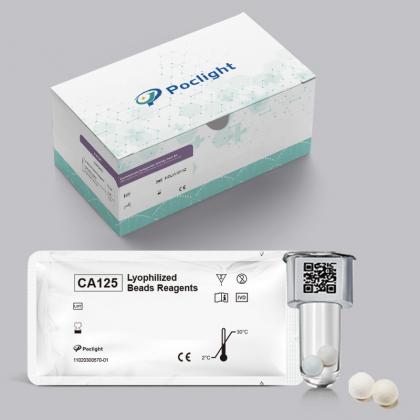
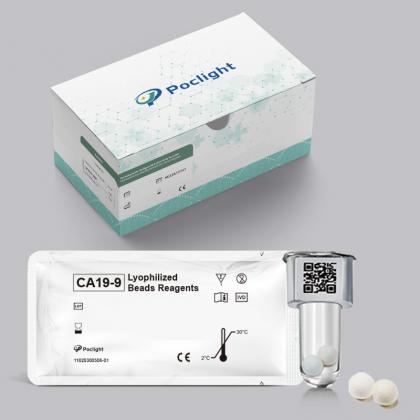
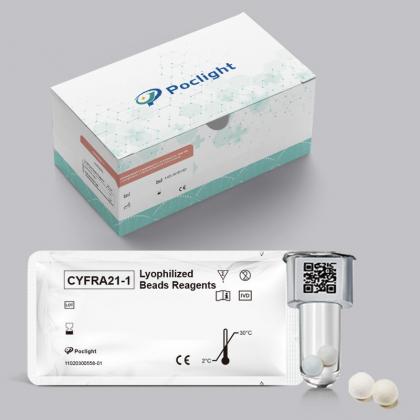
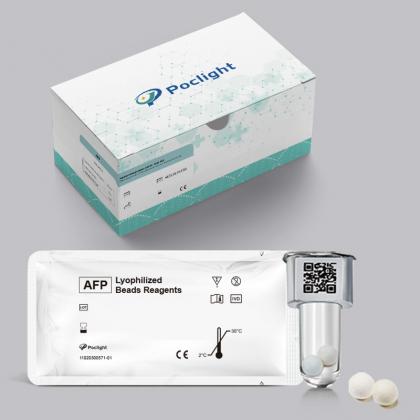
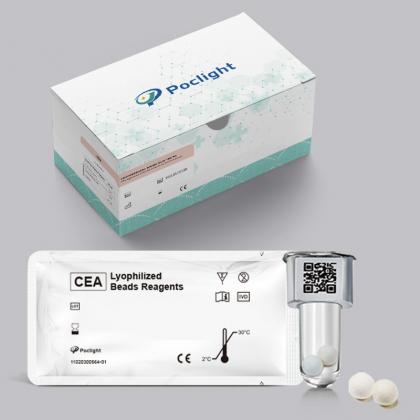
Single-use lyophilized beads; 2–30°C storage; validated shelf life up to 18 months |
|
Speed |
First result as fast as 3 min; assay durations commonly 3–15 min |
|
Parallel testing |
7 independent detection channels |
|
Throughput |
Up to 80 tests/hour |
|
Footprint |
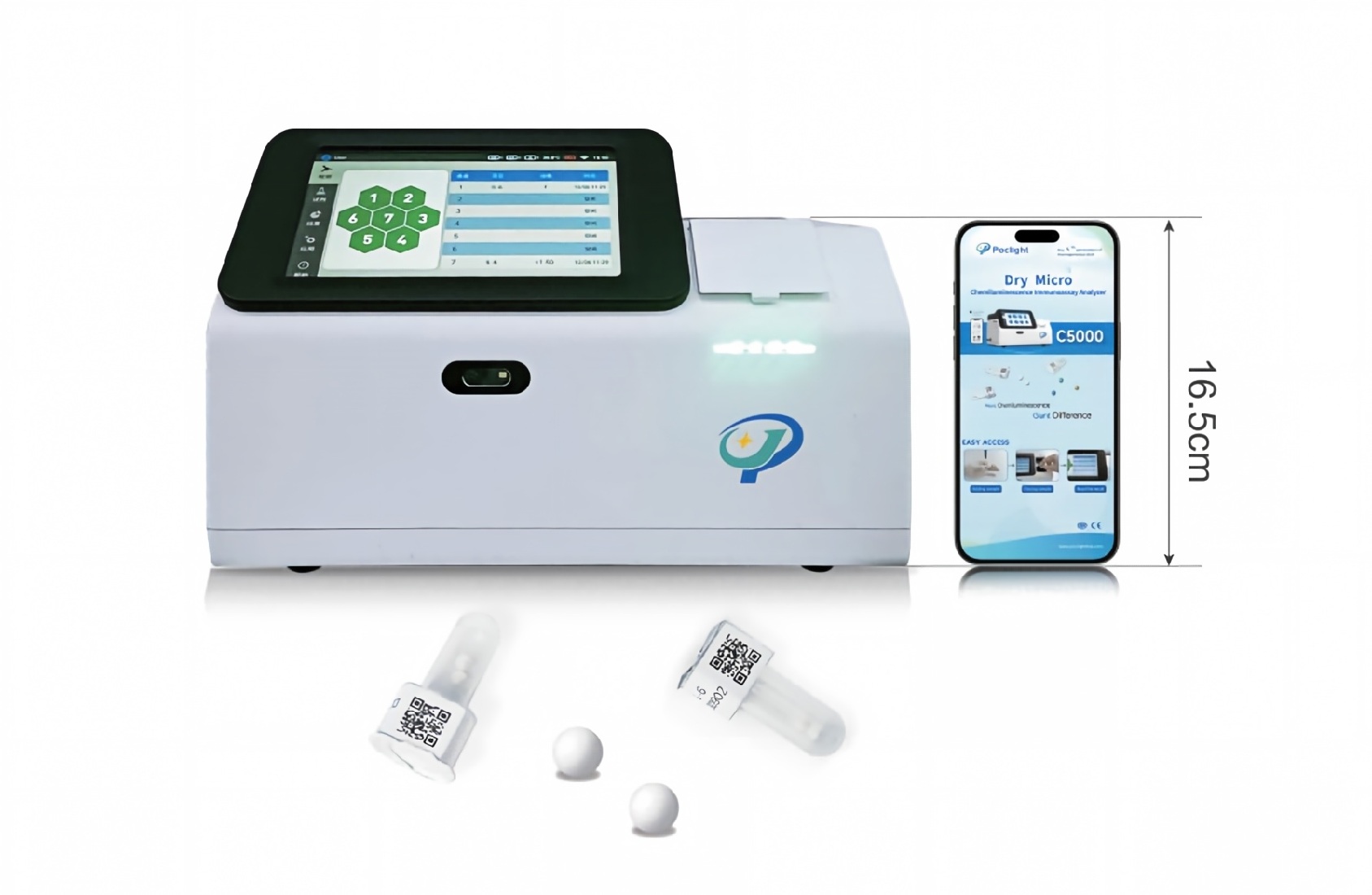
325 × 231 × 213 mm; ≤8.5 kg |
|
Sample types |
Serum and plasma for most assays; whole blood only for assays validated for that matrix |
|
Workflow |
Add sample → load reagent → read result; no magnetic-bead washing step |
|
Operational value |
Compact placement, lower fluidic complexity and simplified reagent logistics for decentralized or mid-/low-throughput testing |



 Network IPv6 compatible con | XML | Mapa del sitio | Blog | política de privacidad
Dejar un mensaje
Escanear a WeChat :

 English
 français
 русский
 español
 português
 العربية
 日本語
日本語 Türkçe
 हिंदी
हिंदी Indonesia